What Radon Is
Radon is a colorless, odorless, tasteless radioactive gas — the decay product of uranium. Uranium in rock breaks down into radium; radium decays into radon; and radon, being a gas, moves. It rises through soil, finds the cracks, sump pits, and pores in a foundation, and accumulates in the lowest levels of a building. Breathed over years, its own decay products damage lung tissue: the EPA attributes about 21,000 U.S. lung cancer deaths a year to radon, and it is the leading cause of lung cancer among people who never smoked.
Why North Dakota, Specifically
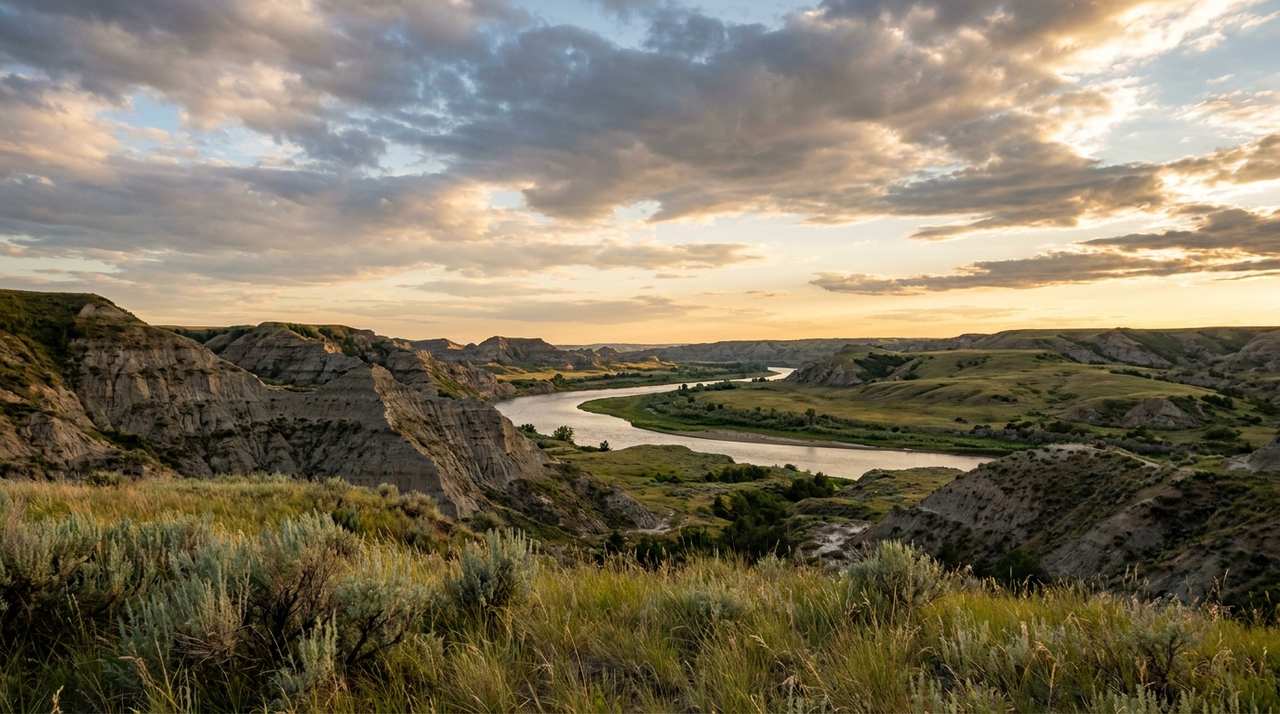
Two layers of geology stack the deck here. The first is the Pierre Shale — the dark marine shale underlying much of the central Great Plains, including central North Dakota. Its Sharon Springs member is measurably radioactive across the region, and USGS work found beds in the Missouri River valley carrying up to 0.01 percent uranium. That's the bedrock.
The second layer is what the ice ages did with it. The glaciers that planed off this state ground uranium-bearing rock into till — the clay-heavy soil most of Bismarck is built on — and spread it across the landscape. USGS radon research flags glacial till for exactly the behavior we see: it cracks as it dries, opening pathways that let soil gas move in volume. Uranium source below, permeable delivery system above.
The State's Own Numbers
None of this is a contractor's scare story — it's the North Dakota Department of Environmental Quality's published position, from its Radon Control Program office on Normandy Street in Bismarck:
- 63 percent of North Dakota homes have radon above the EPA action level of 4.0 pCi/L.
- All 53 North Dakota counties are EPA Zone 1 — the highest-potential designation. North Dakota is one of only two states that can say that.
- For scale: the average outdoor radon level is about 0.4 pCi/L, and the national indoor average is about 1.3. The EPA recommends corrective action at 4.0.
Sit with that first number. In most of the country, radon testing is a just-in-case. In North Dakota, an untested house is more likely elevated than not.
Winter Makes It Worse — and Bismarck Winter Is Long
Radon concentrations respond to how a building breathes, and from November to April a Bismarck house barely breathes at all. Sealed windows, continuous furnace operation, and the stack effect — warm air rising and escaping high, pulling replacement air up from the soil below — all push readings up in exactly the months you're indoors most. It's also why testing during heating season gives you the most honest number your house will produce.
The Housing Stock Leans Into It
This is basement country — nearly every house here has ground-contact living space, and close to a third of Bismarck's housing units were built between 1950 and 1979, decades before anyone roughed in a radon pipe. Finished basements make it personal: the family room, the guest bedroom, the home office are all sitting at the bottom of the radon column. None of this makes a house bad. It makes a house untested at your own risk, in the one state where the odds genuinely aren't in your favor.
The Fix Is Boring, and That's the Good News
For all the geology stacked against this region, the solution is an afternoon of skilled work: an active sub-slab depressurization system that intercepts the gas below the foundation and vents it above the roof, verified by a follow-up test. High radon in North Dakota is a solved problem — what's unsolved is the two-thirds of houses that haven't checked. Start with the test →