Radon Testing in Bismarck: The Only Way to Know
You cannot see, smell, or taste radon. The only way to know what's in your home's air is to measure it. That's not a sales line — it's the EPA's and the U.S. Surgeon General's standing recommendation: test every home below the third floor. In North Dakota, where the Department of Environmental Quality reports 63 percent of homes above the 4.0 pCi/L action level, testing isn't a formality. It's the coin flip you'd rather not lose without knowing.
Short-Term vs. Long-Term Radon Testing
A short-term test runs 48 hours to a few days under closed-house conditions — windows and doors shut except normal entry and exit, starting at least 12 hours before the test. It's the standard for real-estate transactions and for a fast first answer. A long-term test runs 90 days or more and averages out the weather, the seasons, and your furnace cycles — the truest picture of what you actually breathe. A sensible pattern for a Bismarck homeowner: short-term first; if it's borderline, follow with a long-term test before deciding.
The Free Option First: North Dakota's Test Kit Program
Here's the honest part most radon companies skip: the North Dakota DEQ mails free radon test kits to residents, while supplies last, from its Radon Control Program — which happens to be headquartered right here in Bismarck. Request one at deq.nd.gov, set it up per the instructions, and mail it to the lab. If the state's supply has run out, hardware stores carry kits for the price of a pizza.
So when should you pay for professional radon testing instead?
- A real-estate deal is on the line. Buyers, sellers, and lenders need a defensible result from a calibrated device on a 48-hour turnaround — not a mailed-in charcoal packet with a two-week lab queue. More on radon and closings →
- You need the answer fast. Continuous radon monitors report hour-by-hour and produce a printed report the moment the test window closes.
- You just had a mitigation system installed. Post-mitigation verification is how you know the system actually worked — we include it with every install.
- The first result was confusing. A 3.8 next to a neighbor's 15 deserves a properly placed, properly documented retest before you spend or shrug.
Testing in a Real House, with a Real Family in It
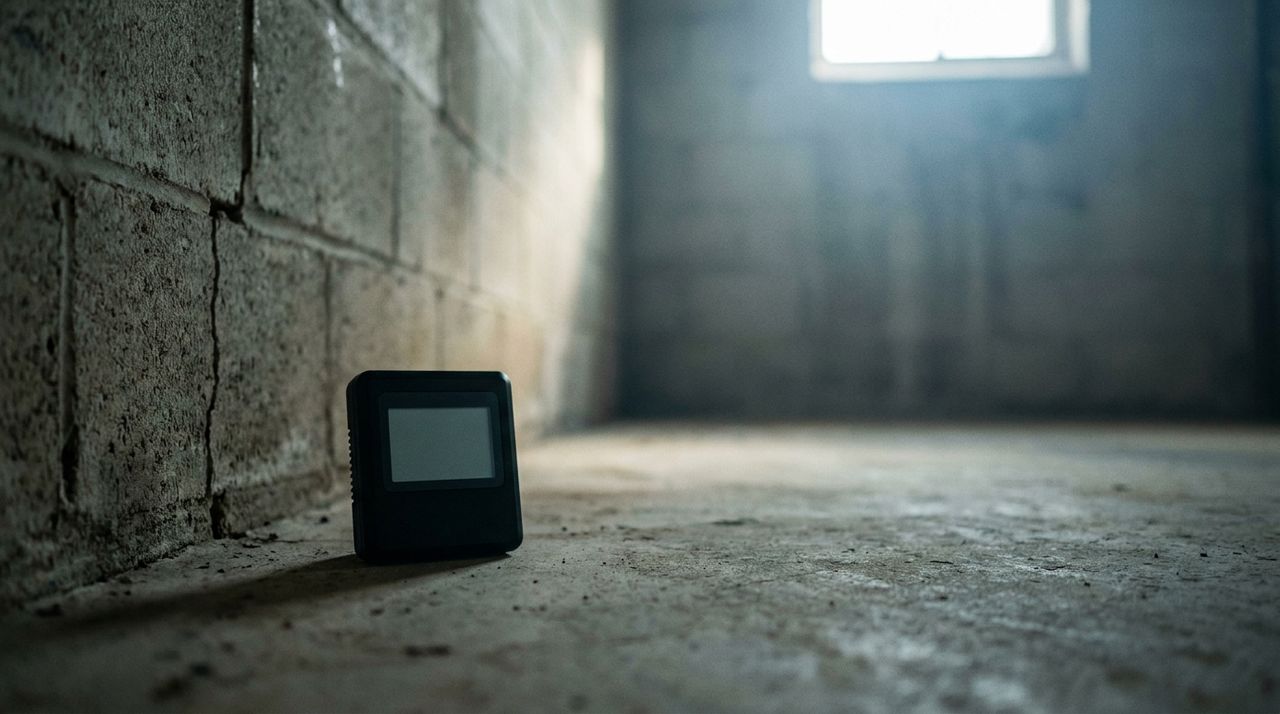
Closed-house conditions don't mean you move out. Live normally — come and go through the doors, run the furnace as usual. Just don't air the place out, skip the window fans, and hold off on the whole-house ventilation until the test is done. In a Bismarck winter, closed-house conditions are simply called winter — which is why heating season is the best time to get a realistic worst-case number.
What Happens if the Number Is High
Nothing dramatic — but don't file it away either. Radon risk is a function of concentration and time, and the fix is well understood: an active sub-slab depressurization system, installed in an afternoon, verified by a follow-up test. Bring us the result and we'll give you a firm written price and an honest read on whether your house needs a system at all. See what mitigation costs in Bismarck →